
Loading...
Loading...
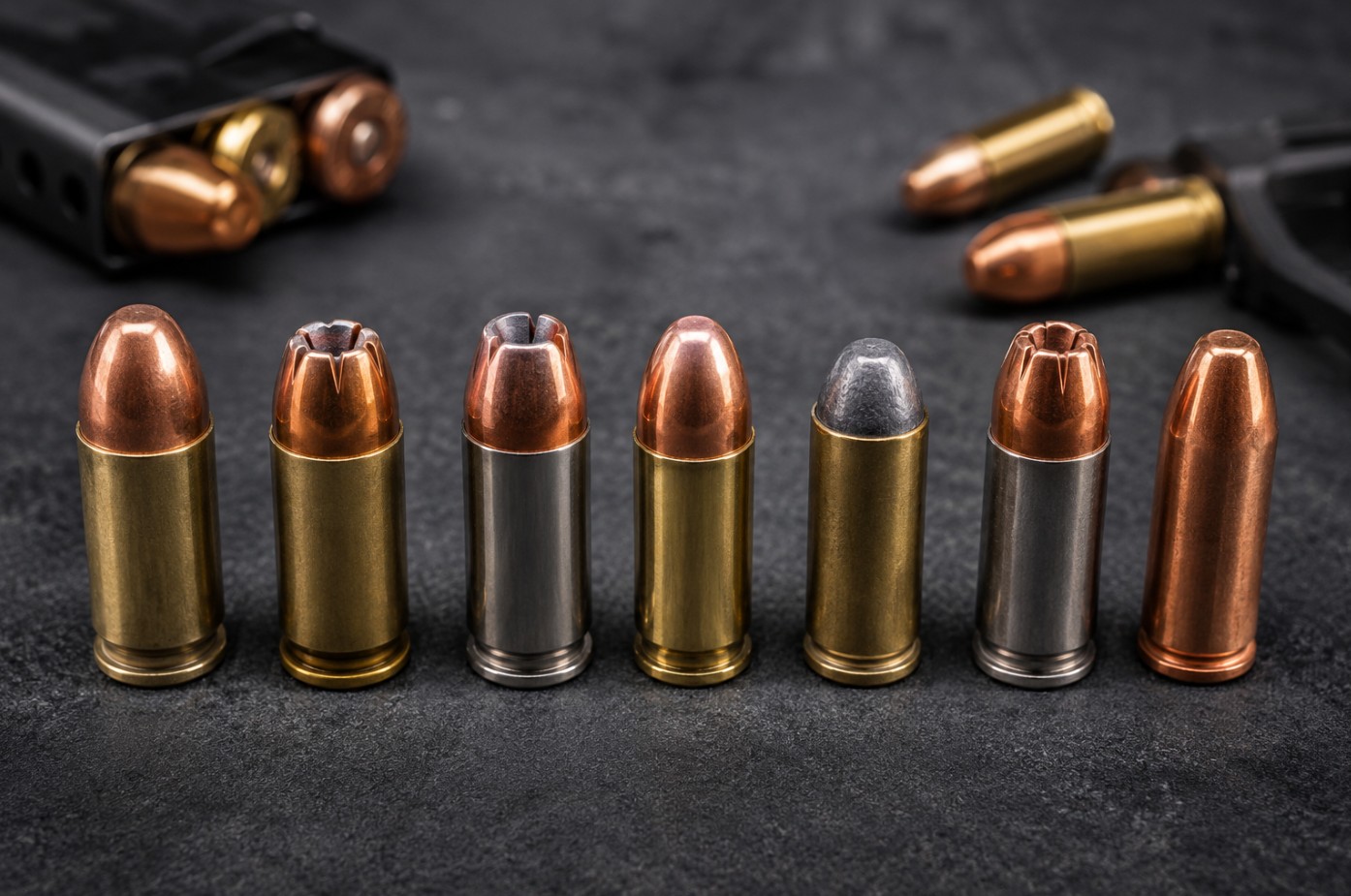
Choosing handgun ammunition can feel confusing when faced with dozens of bullet types, weights, and abbreviations. Walk into any gun store and you’ll likely see labels such as FMJ, JHP, TMJ, JSP, and more. Each serves a specific purpose and performs differently when fired.
Understanding the basics of handgun ammunition helps shooters make informed decisions for training, self-defense, competition shooting, and hunting. The right ammunition can improve accuracy, reliability, and overall shooting experience.
This guide breaks down the most common handgun ammunition types, explains how they work, and outlines the situations where each is commonly used.
Before looking at bullet designs, it’s important to understand the components that make up a handgun cartridge.
A handgun cartridge consists of four primary components:
| Component | Function |
|---|---|
| Bullet | The projectile that leaves the barrel |
| Case | Holds all cartridge components together |
| Powder | Creates expanding gases when ignited |
| Primer | Ignites the powder charge |
Many shooters refer to the entire cartridge as a “bullet,” but technically the bullet is only the projectile portion.
Popular handgun calibers include:
Most ammunition types discussed in this article are available in several calibers.
FMJ stands for Full Metal Jacket.
This is one of the most widely used handgun ammunition types and is often the first ammunition new shooters purchase.
An FMJ bullet features:
The jacket covers the nose and sides of the projectile, helping maintain its shape during firing.
FMJ ammunition is known for:
Because the bullet maintains its shape, FMJ rounds typically penetrate deeply.
FMJ ammunition is the standard choice for practice sessions because it is generally less expensive than defensive ammunition.
Many shooting schools and training facilities recommend FMJ rounds for coursework due to their reliability and cost-effectiveness.
FMJ bullets produce predictable results on paper targets and steel targets designed for handgun use.
JHP stands for Jacketed Hollow Point.
These rounds are among the most popular choices for personal protection.
A JHP bullet contains a hollow cavity in the nose.
When the bullet encounters resistance, the hollow point is designed to expand. This expansion increases the bullet’s diameter and changes how energy is transferred into the target.
JHP ammunition is known for:
Modern hollow-point designs have improved significantly over the years, offering reliable expansion across various barrel lengths and velocities.
Many law enforcement agencies and private citizens select JHP ammunition for defensive carry.
The controlled expansion characteristics make JHP rounds a common choice for home protection applications.
Police departments across the country commonly issue hollow-point ammunition due to its performance characteristics.
The biggest distinction between FMJ and JHP ammunition involves bullet behavior after impact.
| Feature | FMJ | JHP |
|---|---|---|
| Expansion | Minimal | Designed to expand |
| Penetration | Typically deeper | Generally more controlled |
| Cost | Lower | Higher |
| Training Use | Excellent | Less common |
| Self-Defense Use | Less common | Very common |
Shooters often practice with FMJ ammunition and carry JHP ammunition for defensive purposes.
TMJ stands for Total Metal Jacket.
At first glance, TMJ ammunition appears similar to FMJ.
The primary difference lies in bullet coverage.
A TMJ bullet fully encapsulates the lead core, including the base. FMJ bullets often leave a portion of the lead core exposed at the bottom.
TMJ ammunition may offer:
Indoor ranges often see shooters choose TMJ ammunition because of these benefits.
JSP stands for Jacketed Soft Point.
These bullets combine characteristics of FMJ and expanding ammunition.
A JSP bullet features:
Upon impact, the exposed lead can deform and expand.
JSP ammunition is frequently used for:
Many shooters appreciate the balance between penetration and expansion.
Lead Round Nose (LRN) ammunition uses an exposed lead projectile with a rounded profile.
These bullets are:
Many classic handgun loads have historically used lead round nose projectiles.
LRN ammunition is commonly found in:
Frangible ammunition is designed to break apart upon impact with hard surfaces.
These projectiles are often made from compressed metal powders rather than traditional lead-core construction.
When striking steel or other hard materials, the bullet fragments into smaller particles.
Advantages include:
Many specialized training facilities use frangible ammunition for specific exercises.
Bullet type is only one factor when selecting ammunition.
Weight also plays an important role.
Bullet weight is measured in grains.
Examples include:
A grain is a unit of measurement commonly used in ammunition manufacturing.
Heavier bullets often provide:
Lighter bullets generally travel faster but may behave differently upon impact.
Each firearm may show preferences for certain bullet weights.
The best ammunition depends largely on the intended purpose.
Popular choices include:
These options are commonly selected because of affordability and reliability.
Many shooters choose:
Reliability in the specific firearm remains a critical consideration.
Hunters often use:
The ideal choice depends on local regulations and the game being pursued.
When selecting handgun ammunition, consider the following:
Many experienced shooters test several loads before settling on a preferred option.
Handgun ammunition comes in many forms, each designed for a specific purpose. FMJ ammunition remains a popular choice for range training and target shooting due to its affordability and reliability. JHP ammunition is widely selected for personal defense because of its controlled expansion characteristics. Other options such as TMJ, JSP, lead round nose, and frangible ammunition serve unique roles depending on the shooter’s needs.
A solid understanding of ammunition types helps shooters make informed decisions and gain greater confidence at the range. By matching ammunition to its intended purpose, handgun owners can achieve better performance, reliability, and overall shooting satisfaction.