
Loading...
Loading...
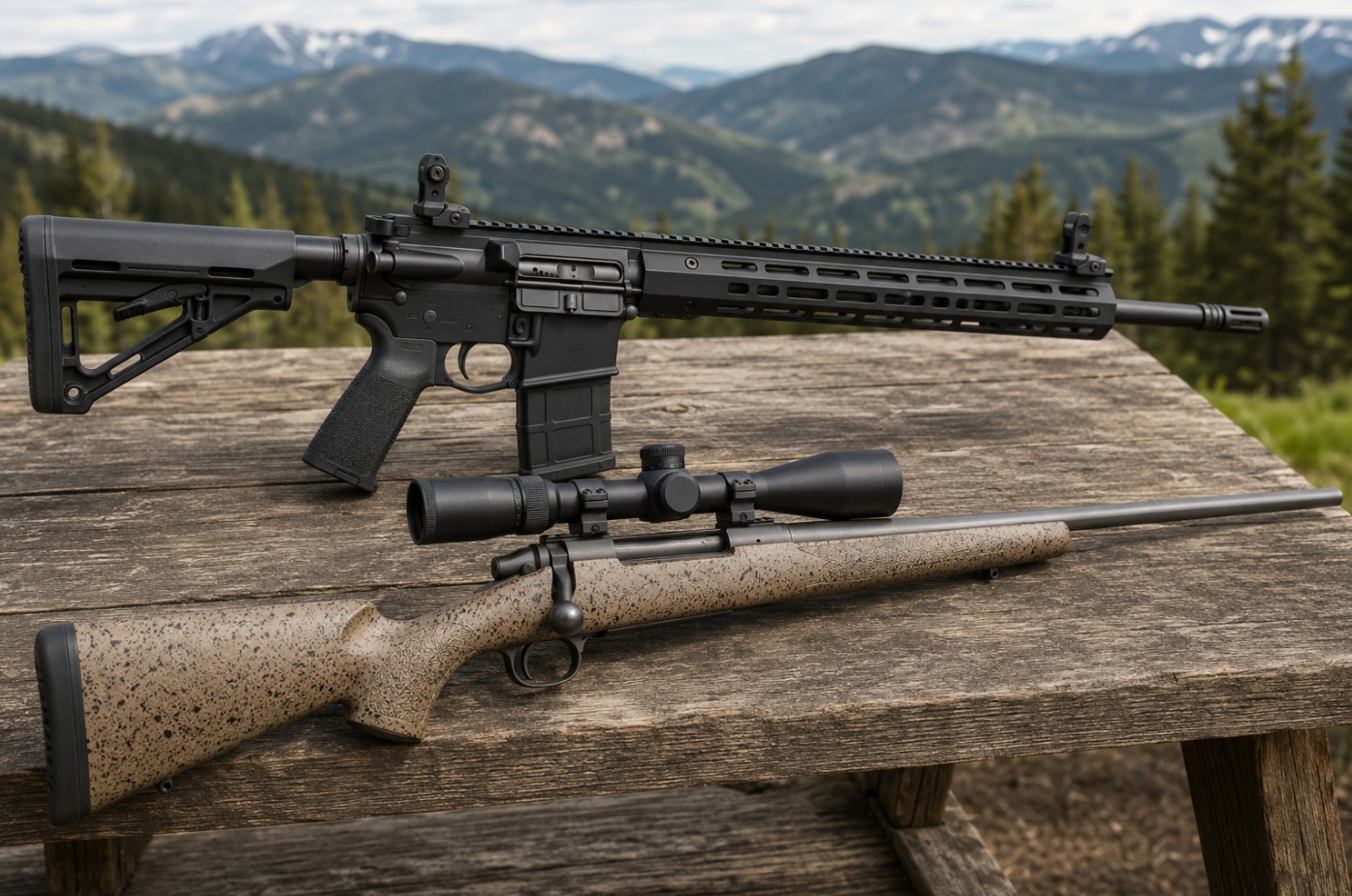
When shopping for a rifle, one of the most common questions shooters face is whether to choose an AR rifle or a bolt action rifle. Both platforms have earned loyal followings, and each offers advantages that appeal to different types of shooters.
Some prioritize rapid follow-up shots and customization, while others value precision, simplicity, and traditional rifle design. Understanding the differences between these two rifle platforms can help you select the option that best matches your shooting goals.
This guide explores the key distinctions between AR rifles and bolt action rifles, including performance, accuracy, maintenance, hunting applications, and overall versatility.
AR rifles are among the most popular firearms in the United States. The term “AR” originally stood for ArmaLite Rifle, named after the company that developed the platform.
Modern AR-style rifles are available in a wide range of calibers and configurations, making them suitable for multiple shooting disciplines.
AR rifles are semi-automatic firearms. After a round is fired, the rifle automatically loads the next cartridge into the chamber.
The shooter only needs to pull the trigger for each shot.
This operating system allows for faster shooting compared to manually operated rifles.
Many AR rifles include:
These features contribute to the platform’s popularity among recreational shooters and firearm enthusiasts.
Bolt action rifles have been a trusted firearm design for generations.
They remain a favorite among hunters, precision shooters, and long-range competitors.
After firing a round, the shooter manually lifts and pulls back the bolt to eject the spent cartridge.
The bolt is then pushed forward and locked into place, chambering the next round.
While this process takes more time than a semi-automatic action, it provides excellent mechanical simplicity.
Typical characteristics include:
Many precision-focused rifles utilize bolt action systems because of their consistency.
| Feature | AR Rifle | Bolt Action Rifle |
|---|---|---|
| Action Type | Semi-automatic | Manual bolt operation |
| Follow-Up Shots | Faster | Slower |
| Customization | Extensive | Moderate |
| Accuracy Potential | Very good | Excellent |
| Maintenance | Moderate | Simple |
| Weight | Varies widely | Often lighter |
| Hunting Use | Common | Very common |
| Long-Range Shooting | Capable | Highly popular |
Accuracy is often one of the biggest factors when comparing these two rifle types.
Bolt action rifles have long been associated with exceptional precision.
Several factors contribute to this reputation:
Many competitive long-range shooters continue to rely on bolt action platforms for maximum precision.
Today’s AR rifles are far more accurate than many shooters realize.
Premium AR platforms can deliver outstanding performance at medium and extended distances.
Advancements in:
have significantly improved AR rifle accuracy.
For many practical shooting applications, the accuracy difference between a quality AR and bolt action rifle may be minimal.
One area where AR rifles clearly stand out is shooting speed.
Semi-automatic operation allows shooters to:
This can be particularly useful in competitive shooting events and training environments.
Bolt action rifles require manual cycling after each shot.
Although experienced shooters can operate the bolt rapidly, they cannot match the speed of a semi-automatic rifle.
For scenarios requiring multiple quick shots, AR rifles often provide a significant advantage.
Customization is one of the defining characteristics of the AR platform.
Owners can easily upgrade:
The modular design allows shooters to create a rifle suited to their exact preferences.
Bolt action rifles can also be customized, though the process is often more limited.
Popular upgrades include:
While customization exists, it generally does not match the flexibility offered by AR rifles.
Both rifle types are widely used for hunting.
The best choice often depends on hunting style and target species.
Many hunters prefer bolt action rifles because they offer:
These characteristics make them well-suited for deer, elk, and other big game animals.
AR rifles are increasingly popular among hunters.
Benefits include:
Predator hunters frequently appreciate the fast handling characteristics of AR platforms.
Proper maintenance is important for any firearm.
Bolt action rifles have relatively simple mechanical systems.
This often means:
Many shooters value the simplicity and durability of bolt action designs.
AR rifles require regular maintenance to perform at their best.
Routine tasks include:
With proper care, AR rifles are highly reliable and capable of handling extensive use.
Price can influence the decision between an AR rifle and a bolt action rifle.
Both platforms offer affordable models for beginners.
Budget-friendly rifles are available from many respected manufacturers.
Higher-end rifles often include:
Costs can increase substantially depending on features and intended use.
Many new shooters ask which platform is easier to learn.
An AR rifle may be ideal for those who want:
A bolt action rifle may be a better fit for those who prioritize:
The right choice depends on the shooter’s goals and interests.
Choosing between an AR rifle and a bolt action rifle comes down to intended use, personal preference, and shooting style. AR rifles offer speed, modularity, and versatility, making them a strong option for recreational shooting, competitions, and many hunting situations. Bolt action rifles continue to excel in precision-focused roles, offering simplicity, reliability, and outstanding accuracy.
Both platforms have earned their place in the firearms community. By understanding their strengths and limitations, shooters can confidently select the rifle that aligns with their needs and provides the most enjoyable experience on the range or in the field.